
We all have our bucket list experiences, many involving exotic travel adventures, from reaching the summit of Mt. Kilimanjaro to experiencing the Northern Lights to standing on top of a Mayan jungle pyramid. Culinary escapades also rank highly on our plate. Think snackable dried grasshoppers in Mexico, roasted guinea pig in Peru or live and “dancing” octopus in South Korea. Jamaica boasts all kinds of fabulous foodie fare. You have probably heard of salt fish, jerk chicken, curry goat, cassava cakes. But have you ever come across Jamaican cow feet?
This traditional Caribbean dish may sound a bit daunting first but give it a chance. It’s a truly unique and authentic eating experience. Maybe wash it down with Jamaica’s tasty and spicy signature ginger beer or rum.
Why You Should Try Cow Feet in Jamaica
So, should we really consider cow feet as a must-try delicacy? Why, yes! There’s absolutely nothing weird about it. After all, we consume all types of other piquant cow parts, from short ribs to brisket to osso buco. Need we mention the many cuts of steak available? So, let’s consider the hoof, and you will be in for a uniquely Jamaican treat. You will impress your palate and your friends upon your return from your Caribbean Island escape.
Know that the consumption of cow feet is not restricted to Jamaica alone. As Cow feet is eaten in Asia, Latin America, Africa, and Europe. It’s an ingredient in most great, classic cuisine, from French, Italian to Chinese. People will also devour pigs, goat, and chicken feet. In Jamaica, chicken feet are cooked in a traditional Jamaican soup called mannish water. Just like chicken noodle soup is used in the US as “nature’s penicillin,” this broth is considered a potent cure for the cold and flu. Due to its strength-boosting power, it’s also regarded as an aphrodisiac. In Trinidad, people love souse or pickled pig feet.
But let’s get going and focus on authentic, traditional and tasty Jamaican cow feet. Maybe we are cautious because feet remind us too much of the fact that we are actually eating an animal? Well, we are, and it’s delicious. No offense to vegetarians and vegans intended. The consumption of meat as protein is a necessity in many parts of the world even if it contains barely any flesh and consist of mostly tendons and cartilage. This is where libido-boosting and flu-fighting bone marrow comes in. Are you intrigued yet? Read on.
What Are Jamaican Cow Feet?
Super Food Stew
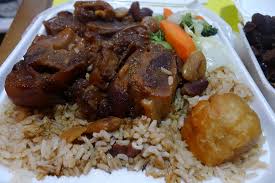
Cow feet are a staple in Jamaican cooking. Cow feet are the heel of the cow, among the cheapest cuts of meat consumed not just in Jamaica but many parts of the globe. They are served in cow foot stew seasoned with spices and herbs and served alongside rice, beans. or mashed potatoes. — as a traditional comfort food that truly captures Jamaican culture as it dates all the way to the 17th century and ancestral eating habits.
Cow feet mostly comprise skin, tendons, and cartilage and have less meat than other cow parts, but they hold a secret nutritious weapon inside: bone marrow. Bone marrow is super healthful, boasting calcium, phosphate, and magnesium. It is high in protein as well as rich and flavorful. Nutritionists consider it one of humanity’s earliest so-called superfoods. What is a superfood? This non-medical term refers to nutritionally dense foods that are especially good for one’s health. So reach for the feet!
The History of the Cuisine
Slave Origin and Ingenuity
The beginning of cow foot stew has its roots in slave culture. During the 1600s, slave owners in the Caribbean would claim the finest parts of the animal for themselves and their families and give the not so savory leftovers to their slaves, meaning a tongue, organs, skin, tail, head, and feet. It was up to the enslaved and underprivileged population to concoct something tasty out of offal and undesirable animal bits when it came time for the meal. But they excelled in making something out of nothing.
Their ingenuity and cooking skills led to cow foot soup or slow-cooked, silky smooth stew with local spices such as allspice, a Jamaican berry that adds flavors of cinnamon, nutmeg, clove, as well as butter beans, which add more protein to the dish.
Fifth Quarters Fare
Cow feet are part of the Jamaican tradition fifth quarters fare. In case you’re not familiar with this term, Merriam-Webster defines “fifth quarter” as “the parts of a slaughtered animal other than offal that supplement the four quarters (as the giblets in poultry and the head, tail, hide, horns, hoofs, fat, tallow, tongue, heart, and liver in cattle and sheep). Got it? This type of cooking borne of scarcity and necessity delivered some amazing recipes not just in Jamaica and the Caribbean.
Bone Marrow Boost
As mentioned above, while feet don’t offer much meat, they do deliver nutritious and delectable bone marrow with health-boosting benefits. It certainly will add a lot of flavor to soups and stews. According to local Jamaican lore, it is even a powerful hangover cure and excellent libido-boosting aphrodisiac. (If the latter isn’t “stimulating” enough, order up a steaming bowl cow cod soup, a local delicacy of lots of lore featuring bull pen is, green plantains, Scotch bonnets, and rum!) Cow foot stew is popular not just in Jamaica but throughout the Caribbean.
Why You Should Try It While Visiting Jamaica
One way to really experience a country or place and capture its soul and essence is via its cuisine. When in Rome…you know the old adage? When in Jamaica, don’t be timid and order up some cow feet. It’s a totally unique culinary experience with ahttps://pepperscale.com/scotch-bonnet-pepper/ distinctive flavor you cannot experience anywhere else in the world. As mentioned above, ordering a savory, authentic cow feet stew is the way to go.
Traditional ingredients include Jamaican scotch bonnet peppers, pimento seeds, and the local thyme, which is more fragrant and potent than its European counterparts. This comforting dish is usually cooked with a generous helping of butter beans, the perfect complement thanks to their soft texture. It’s best served with rice and peas or mashed potatoes.
Celebrity Endorsement
We think of a culinary icon, celebrity chef, travel documentarian and bad boy Anthony Bourdain who died earlier this year, and who examined global culture and the human condition through his culinary exploits around the world. He would have gladly devoured a bowl of Jamaican cow feet stew with butter beans. He probably did! They would have documented it in such a way as to make your mouth water for a tip to Jamaica and a taste of the fabled, aphrodisiac stew. (In fact, he did love cow foot soup, which he sampled on an episode of Anthony Bourdain Parts Unknown in Little Haiti in Miami, Florida, in 2015, and which he described as “some next level stuff.”)
Basically, all of us humans are like one great cow feet stew cooked together. Through the foods we eat we can connect to other cultures and ways of life; we can exchange ideas and recipes; we can come together over a meal and have a good conversation and a laugh. If the gelatinous texture of cow feet isn’t your cup of tea, at least you will have a good story to tell upon your return from Jamaica.
A lot of cooking is born out of necessity, even our own cuisine here in the United States. And it’s always great to see what human creativity has concocted in the kitchen and elsewhere. Stew on this a little, then scour local Jamaican restaurants for not just well-documented jerk chicken and curry goat, but as for the dish with the slave history. It’s an honor and a tribute to Jamaican culture and cooking.
Conclusion
Are you an adventurous eater? If the answer is no, maybe it’s time to treat your taste buds to some new culinary creations. After all, we are not talking about bugs or insects (Yes, people eat ants, beetles, worms and maggots). Cow feet are not even as exotic as a rattlesnake, alligator or even pufferfish, considered the second most poisonous vertebrate on the planet, yet revered as a delicacy. No, we are talking about Bovinae — in other words: cows. Here in the United States, according to USA Today, we consumed an average of 55.6 pounds of beef in 2016. So why not try something new, especially when visiting another part of our beautiful planet?
Cow feet are steeped in local Jamaican history, dating all the way back to the slave days of the 1600s, when people had to make a nutritious and tasty meal out of offal. Luckily, their creativity knew no bounds, and they concocted the (in)famous Jamaican cow feet stew, full of flavor, proteins, health benefits, and even aphrodisiac qualities. It’s a must when visiting this exciting destination of rainforests, reef-lined beaches and lovely mountains, just as crucial as jamming to some reggae, visiting the Bob Marley Museum, and maybe bobsledding through the rainforest.